Scissor Needle Sewing SEW: A Designer’s Real-World Review
First Impressions: Bold, Playful, and Craft-Centric
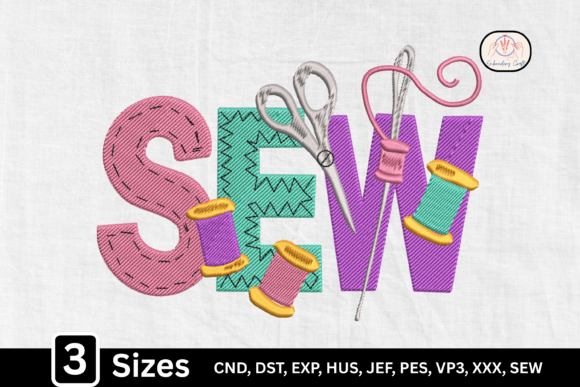
The Scissor Needle Sewing SEW design immediately strikes me as a fun, stylized embroidery piece with a clear craft-focused personality. The word “SEW” is creatively integrated with fabric textures, thread lines, and subtle tool silhouettes like scissors and a needle. It’s a charming visual nod to the handmade community and works well as both a standalone motif and a thematic accent.
What stands out is the balance between detail and readability. It doesn’t feel too busy, which is a win for embroidery work where clarity matters. The playful use of texture gives it a hand-drawn feel, making it ideal for makers who want to emphasize authenticity in their products.
Real-Life Use: From Tote Bags to Sweatshirts
I recently tested Scissor Needle Sewing SEW on a custom tote bag and a lightweight sweatshirt, both destined for a local craft boutique. On the tote, the design read clearly and added a boutique-ready touch. The fabric texture in the letters gave it dimension without overwhelming the bag’s minimalist look.
On the sweatshirt, the design held up well, especially when stitched in a high-contrast thread. The satin and fill stitches were consistent, and I didn’t notice any distortion, even around the more detailed corners like the tip of the scissors. It’s a solid option for small-batch apparel decorators or Etsy sellers looking to add a subtle branding element to their handmade clothing line.
Great for Baby Items and Holiday Gifts
One of the most surprising uses was on a baby onesie. The design scaled down nicely without losing its character. It added a soft, whimsical note that parents appreciated. I used a soft stabilizer underneath to prevent puckering on the stretchy knit fabric, which helped maintain the design’s crisp lines.
For holiday gifts like embroidered tea towels and pillow covers, Scissor Needle Sewing SEW performed well as a thematic anchor. It’s festive without being seasonal, which means it can be used year-round in craft shops or personalized gift lines. The color variety in the original design also makes it easy to match with existing holiday palettes.
Where to Use It Carefully
While Scissor Needle Sewing SEW is versatile, it does require some thoughtful placement. I noticed that on very dark fabrics, the lighter thread details—like the stitching texture—can get lost unless you adjust the thread colors. It’s also not ideal for very small hoop sizes, especially if the scissors or needle details are scaled down too much. Those fine lines can blur or merge, making the design less legible.
I’d also be cautious when using it on curved surfaces like caps or patches with irregular shapes. The design’s corners and outer elements may not stitch cleanly if the hoop placement isn’t perfect. And for stretchy or textured fabrics like terry cloth or minky, be sure to use the right stabilizer and test first—especially around the more intricate areas like the needle tip or thread loops.
Visual Impact and Customer Appeal
From a visual standpoint, Scissor Needle Sewing SEW adds a professional yet approachable touch to finished products. It reads as handmade without feeling amateurish, which is key for small shop owners trying to build brand trust. The design’s balance of texture and structure makes it stand out in product photos, especially when paired with mockups that highlight fabric details.
Customers responded positively to the design’s personality—many commented that it felt like a “maker’s signature” on their custom items. That’s a big plus for Etsy sellers or craft fair vendors who want to elevate their product presentation without overcomplicating things. It’s also gift-friendly, with a clear theme that communicates the love of crafting without needing extra explanation.
Designer Notes: Practical Tips Before You Stitch
- Test on scrap fabric first—especially if you’re using a new stabilizer or adjusting thread colors.
- Check thread contrast against your base fabric. Lighter elements may disappear on dark backgrounds.
- Review stitch density before stitching on stretchy or delicate materials to avoid puckering.
- Confirm hoop size matches your machine and project—don’t assume it’s compatible with small hoops.
- Inspect small details like the needle and scissors to ensure they stitch cleanly at your chosen size.
- Test in black and white mockups to see how the design reads without color.
- Compare light and dark fabric backgrounds to determine the best thread palette.
- Use proper stabilizer for your fabric type—especially for knits or textured materials.
- Verify licensing before selling finished items or digital embroidery files.
Final Thoughts: Worth the Thread Time
Scissor Needle Sewing SEW is a thoughtful, well-balanced embroidery design that bridges the gap between craft charm and professional polish. Whether you're creating custom apparel, personalized baby items, or boutique-style tote bags, this design adds a touch of personality without sacrificing clarity or quality.
As a designer, I appreciate how it holds up across different fabric types and product formats. It’s not just a digital embroidery file—it’s a design asset that helps tell a story about your brand or your handmade product. Just remember to test, adjust, and consider your fabric before stitching the final version. Do that, and you’ll end up with a finished product that feels intentional, well-made, and uniquely yours.